
External Works
External works cover the full range of hard and soft site improvements that sit outside a building’s walls but inside its boundary — everything from groundworks and edging to retaining structures and access surfaces. It’s a broad term, and that’s exactly why Bluebell Commercials offers it as a single, coordinated service rather than leaving clients to piece together several separate contractors. Managing external works under one contractor means one point of accountability for a scope that would otherwise involve multiple trades and multiple handover gaps.
External Works for Commercial Programmes
For developers and main contractors, external works is often the last phase of a build programme, which means it carries the most schedule pressure. Bluebell Commercials understands that external works sitting at the end of a programme cannot slip without pushing back practical completion, and structures its approach around hitting those dates without cutting corners on quality.
Our external works service typically includes:
- Site groundworks and preparation ahead of hard landscaping
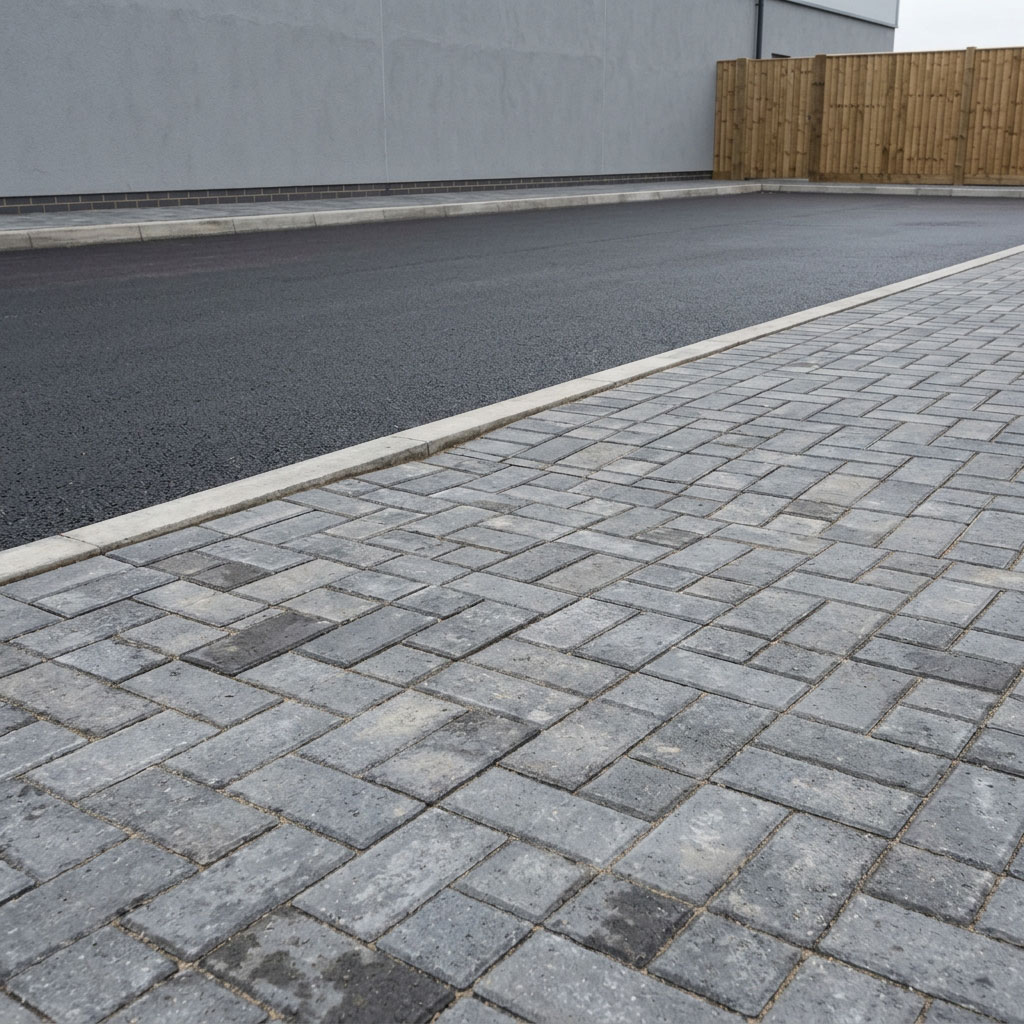
- Kerbing, edging, and boundary definition
- Retaining wall construction where site levels require it
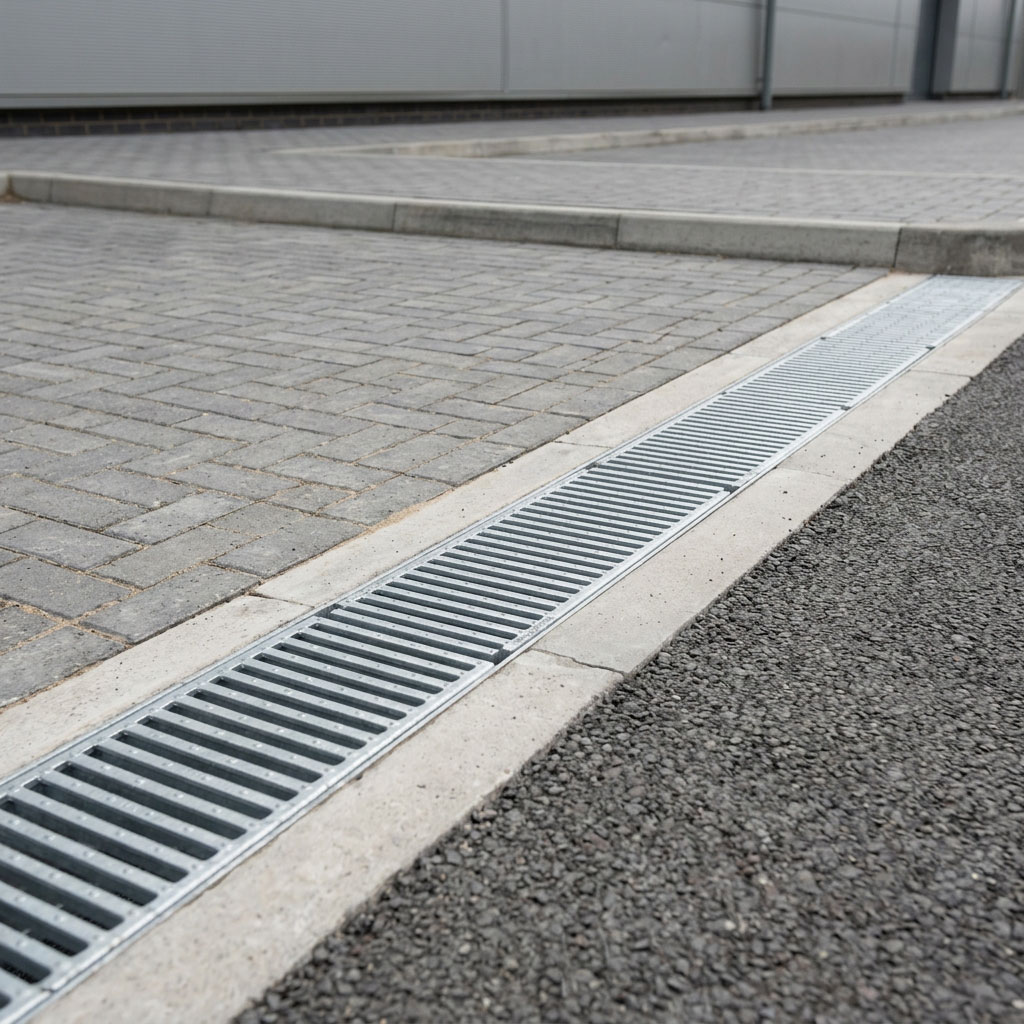
- Coordination of drainage, paving, and planting as a single scope
- Snagging and finishing works ahead of practical completion
External works is where a lot of the unglamorous but essential site quality gets decided. Poorly finished edging or a retaining wall built without proper drainage consideration causes problems years later, long after the original contractor has moved on. Bluebell Commercials builds external works to last, not just to pass a final inspection.
Commercial Hard Landscaping as Part of External Works
Commercial hard landscaping sits within the external works scope and covers the built, non-planted elements of a site — paths, retaining structures, edging, and surface transitions. Getting hard landscaping right is largely about attention to detail at the junctions: where paving meets planting, where a retaining wall meets a drainage run, where a kerb line changes direction. These are the points that fail first if rushed.
Bluebell Commercials treats commercial hard landscaping as an integrated part of the wider external works scope rather than a bolt-on, which means these junction points are planned from the start of the project rather than resolved on site as an afterthought. That approach reduces snagging and rework once the site is handed over.
Commercial Retaining Walls and Site Levels
Commercial retaining walls are often required where a site has changes in level — a car park cut into a slope, a raised amenity area, or a boundary that needs to hold back higher ground next door. Retaining structures carry real engineering considerations, and getting them wrong risks far more than an aesthetic problem.
A properly built retaining wall accounts for drainage behind the structure, appropriate foundations for the loads involved, and finishes that suit the rest of the site. Bluebell Commercials scopes retaining wall work as part of the broader external works package, so drainage and structural considerations are resolved together rather than treated as separate problems for separate contractors to argue over later.
What Retaining Wall Projects Require
Retaining wall projects typically require:
- Ground investigation to confirm suitable construction method
- Proper drainage behind the retained structure
- Foundations specified for the loads and ground conditions involved
- Finishes coordinated with the surrounding external works scheme
Drainage behind a retained structure is the element most often underspecified, and it is the usual cause of failure some years after completion. Water building up behind a wall exerts far more pressure than the retained material alone, so the drainage design is as important as the wall construction itself.
Commercial Landscape Edging and Boundary Definition
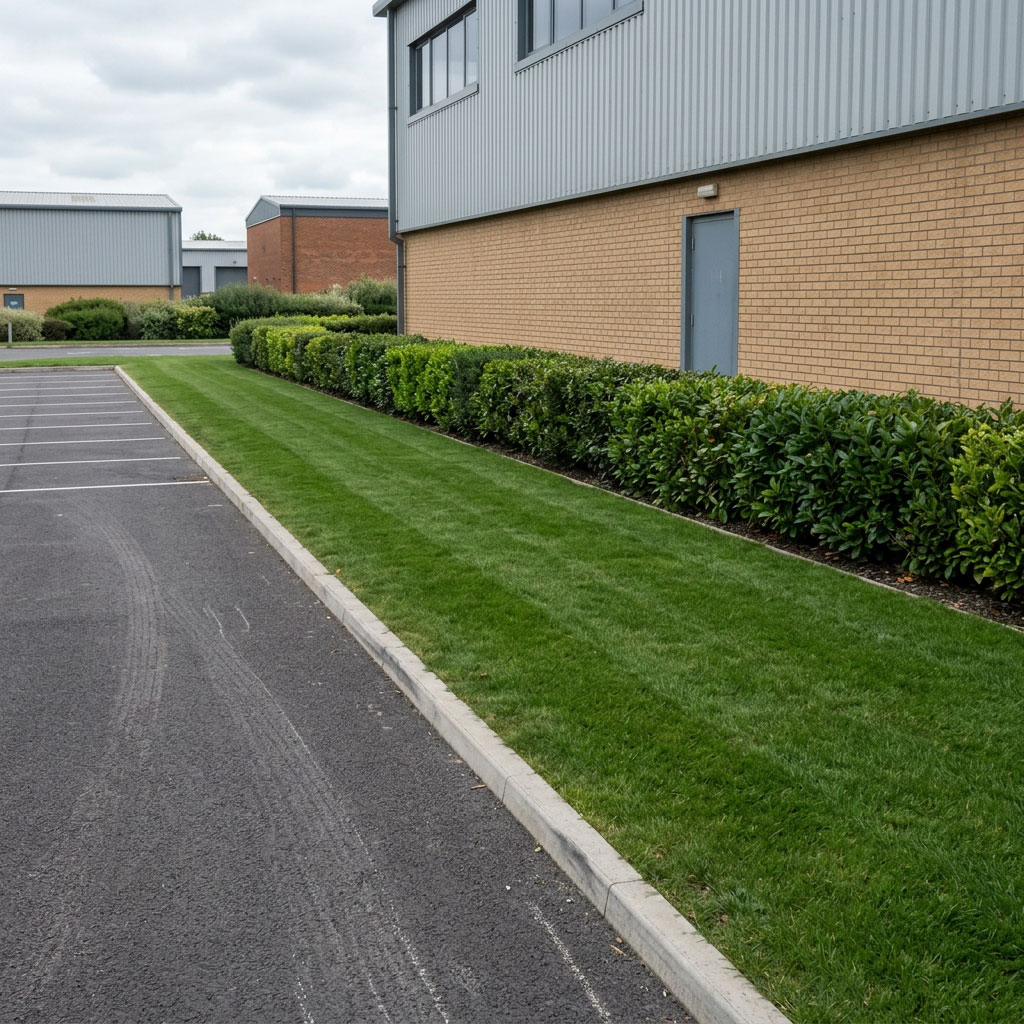
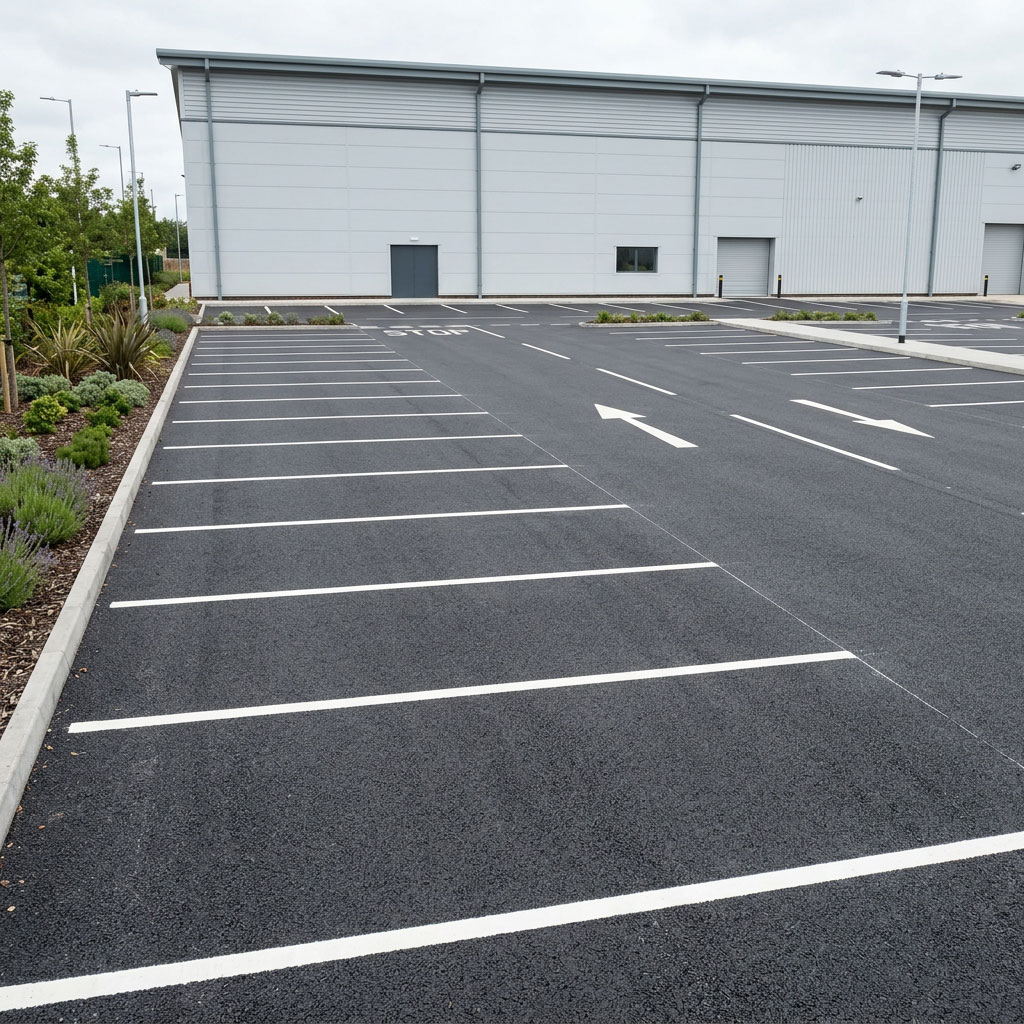
Commercial landscape edging might seem like a small detail compared to retaining walls or groundworks, but it does a lot of practical work on a commercial site. Edging separates planted areas from paved or amenity surfaces, prevents turf and beds from spreading into paths or car parks, and gives a site a tidy, deliberate finish that reads as well-managed rather than neglected.
Material choice depends on what the edge is doing. A line separating planting from a footpath has different demands from one retaining a level change or containing loose surfacing under vehicle traffic. Specifying to the job rather than to a default keeps the detail working long after installation.
- Edging specified against the load and level change involved
- Timber, concrete, steel and kerb options as the site requires
- Installed with the surfacing programme, not retrofitted
- Set to finished levels agreed on site
Why Edging Detail Matters Long-Term
Getting edging specification right — the right material, the right depth, the right line — makes ongoing grounds maintenance easier and keeps a site looking sharp for longer. Bluebell Commercials includes edging and boundary definition as standard within external works scoping, because it’s a detail that’s cheap to get right at construction stage and expensive to fix later.
External works is rarely a single, simple job, which is exactly why it benefits from one contractor managing the whole scope. Bluebell Commercials coordinates groundworks, retaining structures, edging, and finishing works so nothing falls through the gaps between trades. Call 0151 936 7548 or 07807 364760 to discuss your external works scope and get a straightforward quote.