
Commercial Parking Lot Paving
Commercial parking lot paving has to handle daily vehicle traffic, weather exposure, and heavy use without breaking down within a few seasons, which makes it a very different job to standard hard-standing work. A car park that fails early doesn’t just cost money to fix — it disrupts customers, staff, and deliveries while repairs happen. Bluebell Commercials approaches parking and access area construction as a durability-first job, with the surface specification and preparation matched to how the area will actually be used.
Building Access Areas That Handle Daily Traffic
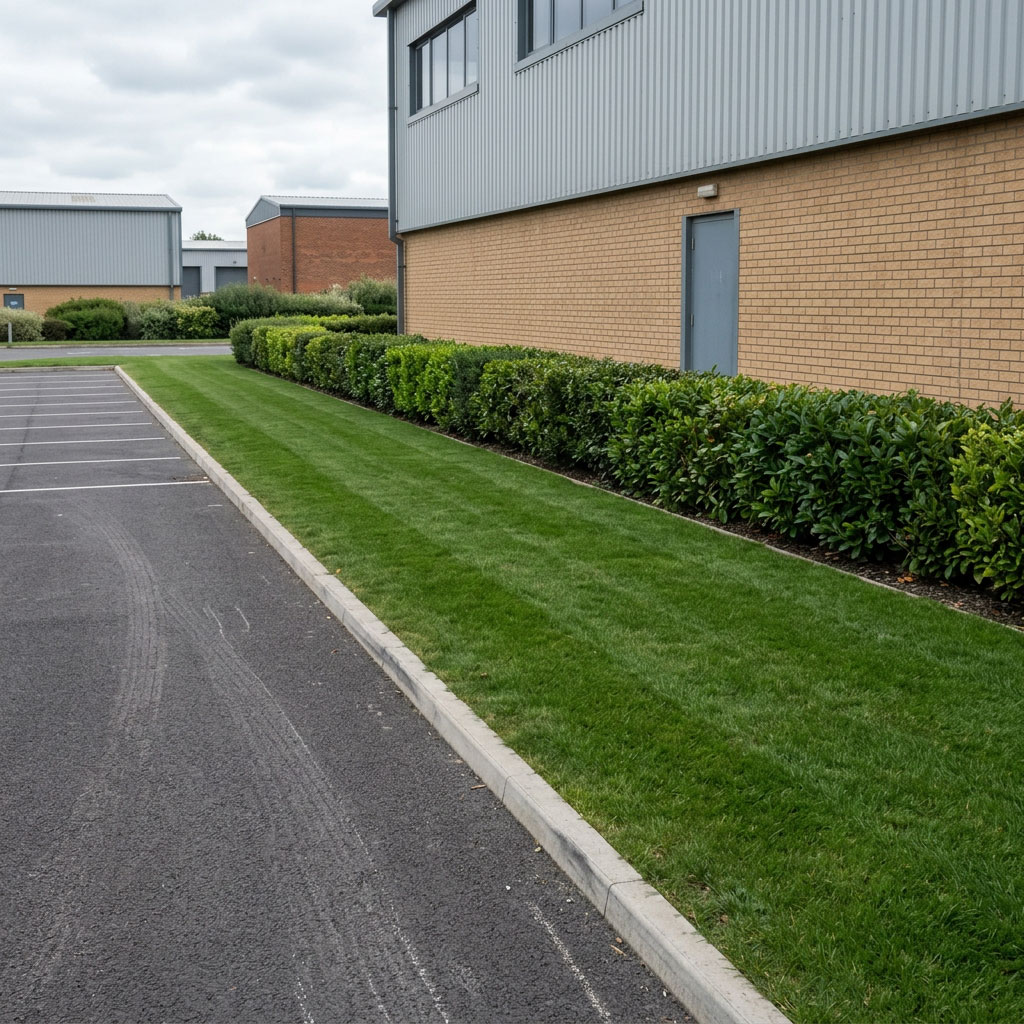
Parking areas and access roads sit at the intersection of several site requirements — they need to cope with vehicle loading, integrate with drainage, and connect cleanly to other paved or landscaped areas. Bluebell Commercials scopes parking and access construction as part of the wider external works picture, so surfacing, drainage falls, and edge details are planned together rather than resolved piecemeal.
Our parking and access area service typically includes:
- Ground assessment and sub-base preparation for vehicle loading
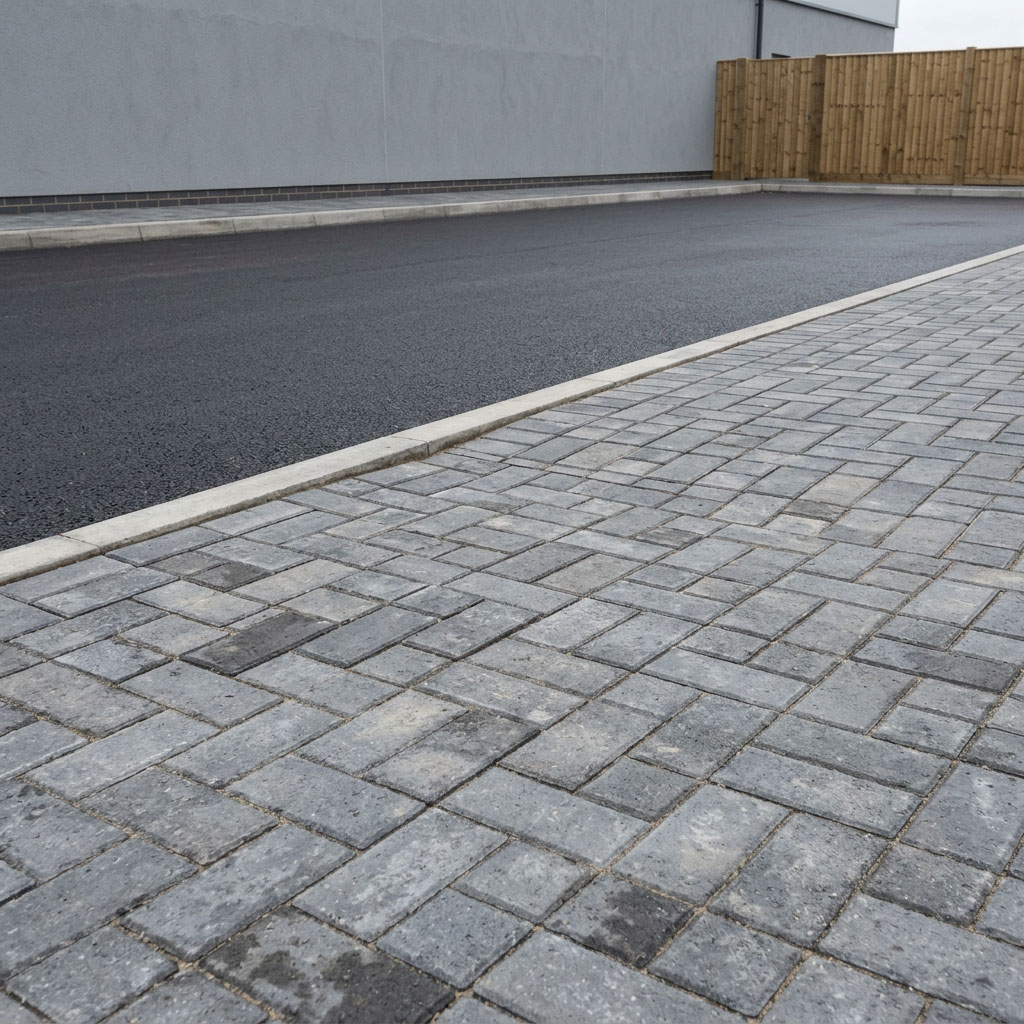
- Parking lot asphalt paving or block paving depending on site requirements
- Access road construction connecting to existing site infrastructure
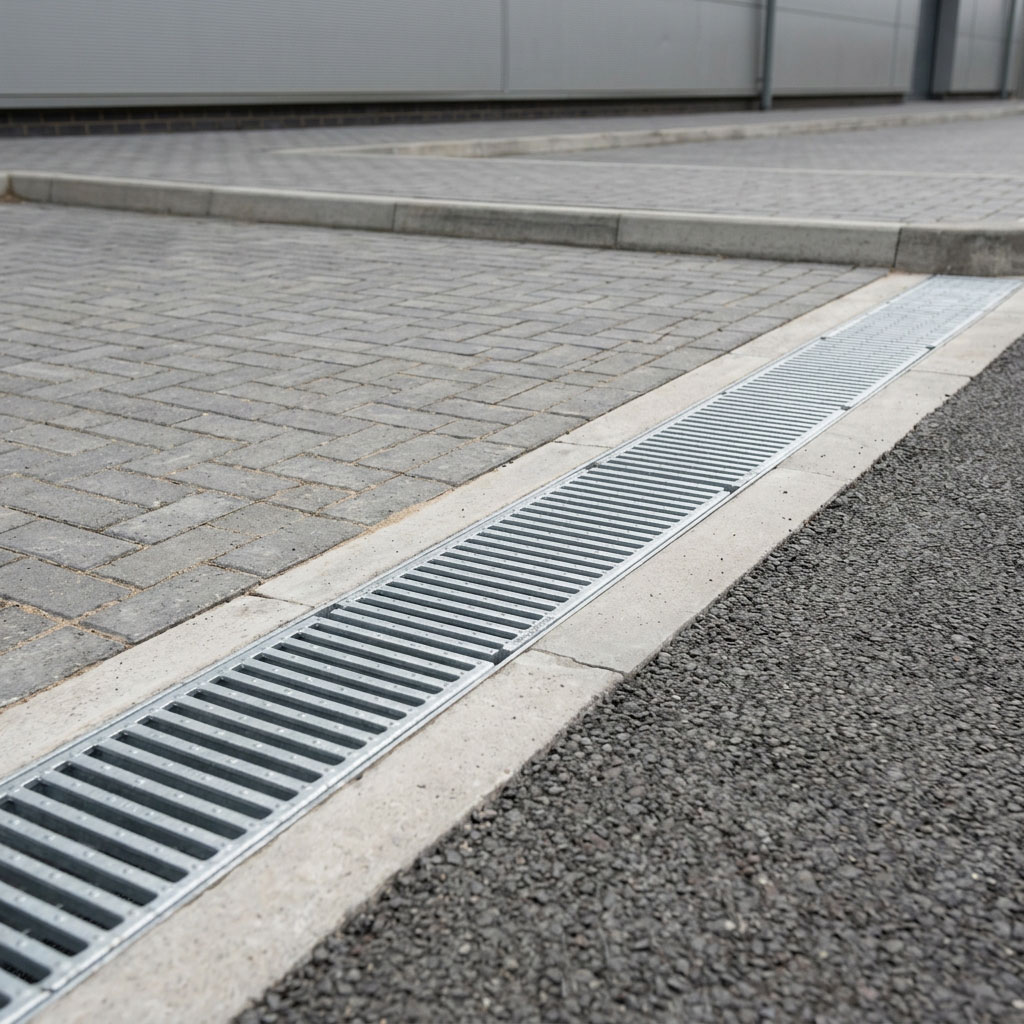
- Drainage falls integrated into the surfacing design
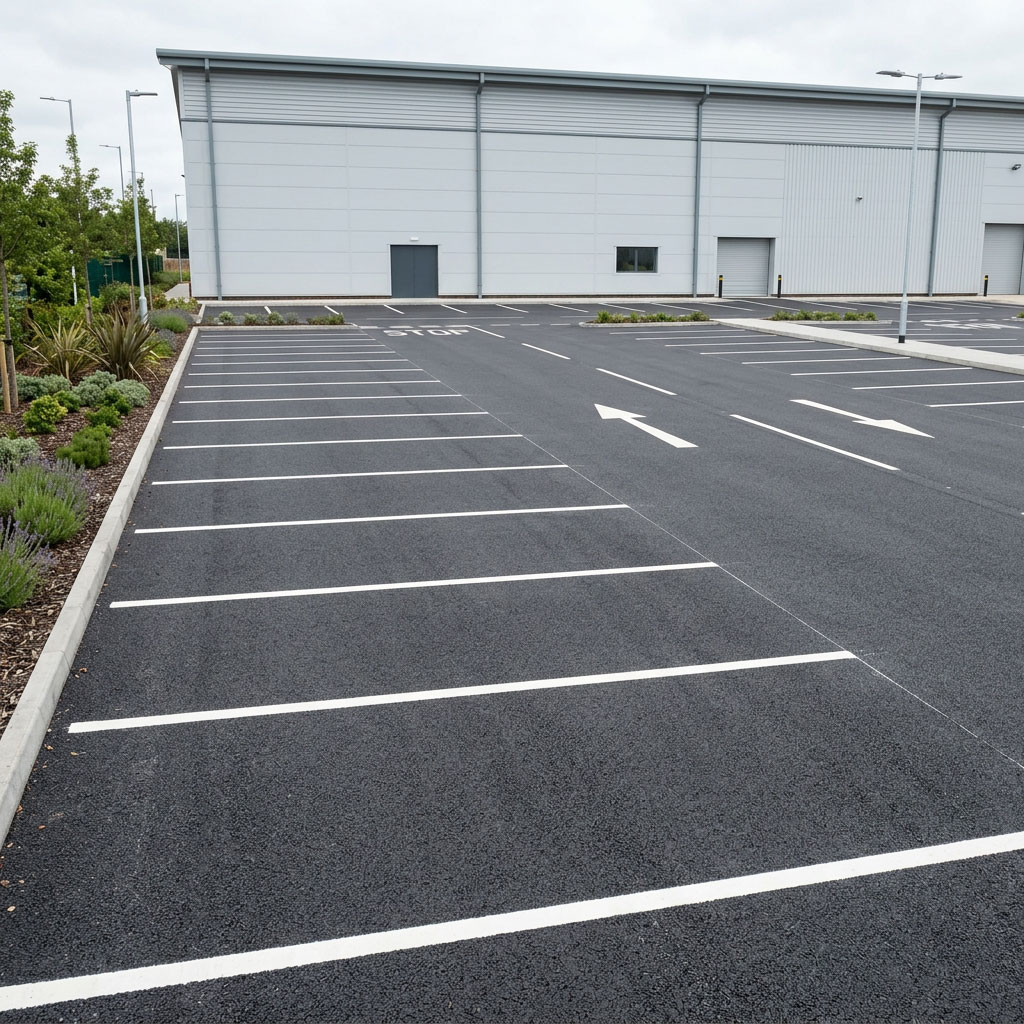
- Line marking and finishing works ahead of handover
Access roads in particular need a specification that reflects actual use — a route used occasionally by staff cars needs a different build-up to one used daily by delivery vehicles or HGVs. Bluebell Commercials asks about actual usage patterns before specifying a surface, rather than applying one standard build-up regardless of load.
Commercial Car Park Construction From the Ground Up
Commercial car park construction starts well below the visible surface. Sub-base depth, compaction, and drainage all need to be right before any surfacing goes down, because these are the elements that determine whether a car park holds up under years of vehicle traffic or starts showing cracking, rutting, and standing water within a couple of seasons.
Bluebell Commercials builds car parks with this sequence firmly in mind — ground assessment first, proper sub-base second, surfacing and finishing last. Clients get a realistic programme that reflects how long proper preparation actually takes, rather than a fast quote that skips the stages that matter most for longevity.
Commercial Parking Lot Resurfacing for Ageing Surfaces
Commercial parking lot resurfacing becomes necessary when an existing surface has reached the end of its useful life — extensive cracking, potholing, or drainage failure that patch repairs can no longer keep up with. Resurfacing is often more cost-effective than continual small repairs once a surface reaches this stage, because it addresses the underlying problem rather than treating symptoms.
Bluebell Commercials assesses whether resurfacing or targeted repair is the right approach for each site, rather than defaulting to a full resurface when a smaller intervention would do the job. This honest assessment matters to clients managing maintenance budgets who don’t want to pay for more work than the site actually needs.
- Full-depth construction for new parking areas
- Resurfacing where the existing sub-base remains sound
- Access roads and site connections built to carry service vehicles
- Line marking and bay layouts completed to the agreed plan
Commercial Parking Area Surfacing and Long-Term Cost
Commercial parking area surfacing is frequently priced on the initial figure alone, which is how sites end up resurfaced twice in the period a properly built one would have lasted. The cost that matters is the whole-life cost: sub-base construction, surfacing specification, drainage, and the resurfacing interval those choices produce.
Bluebell Commercials prices the build against expected traffic rather than to a headline figure, and is clear about what a lower specification would mean in practice. A car park handling staff vehicles has genuinely different requirements from one taking daily deliveries, and pretending otherwise only defers the cost.
- Sub-base built for the traffic the area will actually carry
- Surfacing specified against use, not to a standard depth
- Drainage designed into the levels rather than added later
- Line marking and bay layout completed as part of the programme
Working Around Live Sites and Business Operations
Parking and access work is rarely carried out on an empty site. Staff still need to park, deliveries still need to arrive, and customers still need a route in. Phasing the work so that access is maintained is often the difference between a straightforward project and a disruptive one.
Bluebell Commercials plans phasing at the quoting stage rather than improvising once work begins, agreeing which areas close and when, how vehicles will be routed while a section is out of use, and what the programme looks like week by week. Clients get one point of contact managing that rather than having to coordinate it themselves.
Commercial Access Road Paving and Site Connectivity
Commercial access road paving connects different areas of a site and often carries the heaviest, most repetitive vehicle loading anywhere on the property — delivery routes in particular need a build-up specified for sustained heavy use rather than occasional traffic.
Bluebell Commercials treats access roads as a distinct specification challenge within the wider parking and access scope, ensuring the busiest routes on a site get the strongest build-up rather than a uniform specification applied across areas with very different actual usage.
Bluebell Commercials delivers parking and access area construction built for the traffic your site actually generates, not a generic specification that looks fine until the wear starts showing. Call 0151 936 7548 or 07807 364760 to discuss your car park or access road project.